Zoe Wu

Hi, I'm Zoe! I'm currently a Post-baccalaureate Researcher at the Kempner Institute at Harvard University.

My research is focused on developing algorithmic techniques that enable inference-time control over generative modeling. My research seeks to use the theoretical arguments of advanced statistical inference techniques to create empirically performant, principled algorithms with applications ranging across robotics, protein generation, reasoning, and computer vision.

A major challenge now in generative AI research has been how we can steer the qualitative properties of generated content, incorporate external control into the output, or adjust for biases in the training data. Such aims find uses not only across language and image generation, but also across protein generation — where samples must maximize performance metrics (e.g. stability, affinity in proteins, closeness to target structures) — and robotic manipulation — where robotic policies must align with real-world constraints.

Zoe Wu

Recent News

Jul 2025 – Present
Started as a Post-baccalaureate Researcher at the Kempner Institute at Harvard University!
Aug 2024 – Mar 2025
Student Researcher at Harvard University — Generative AI research with Professor Natesh Pillai.
May 2024 – Aug 2024
Student Researcher at Carnegie Mellon University — Computational Neuroscience with Professor Byron Yu.
Sep 2023 – May 2024
Student Researcher at Harvard University — Theoretical Statistics research with Professor Sitan Chen.
May 2023 – Aug 2023
Engineering Intern at Nuro in Mountain View, CA.
Feb 2023 – May 2023
Engineering Intern at Amira in Somerville, MA.
Jul 2022 – Dec 2022
Engineering Intern at iRobot in Bedford, MA.
Jul 2021 – Mar 2022
Student Researcher at the Wyss Institute for Biologically Inspired Engineering — Computer Vision with Professor Robert Wood.
Sep 2021 – Feb 2022
Project Manager for Onboarding Students, Harvard Undergraduate Robotics Club.

Research

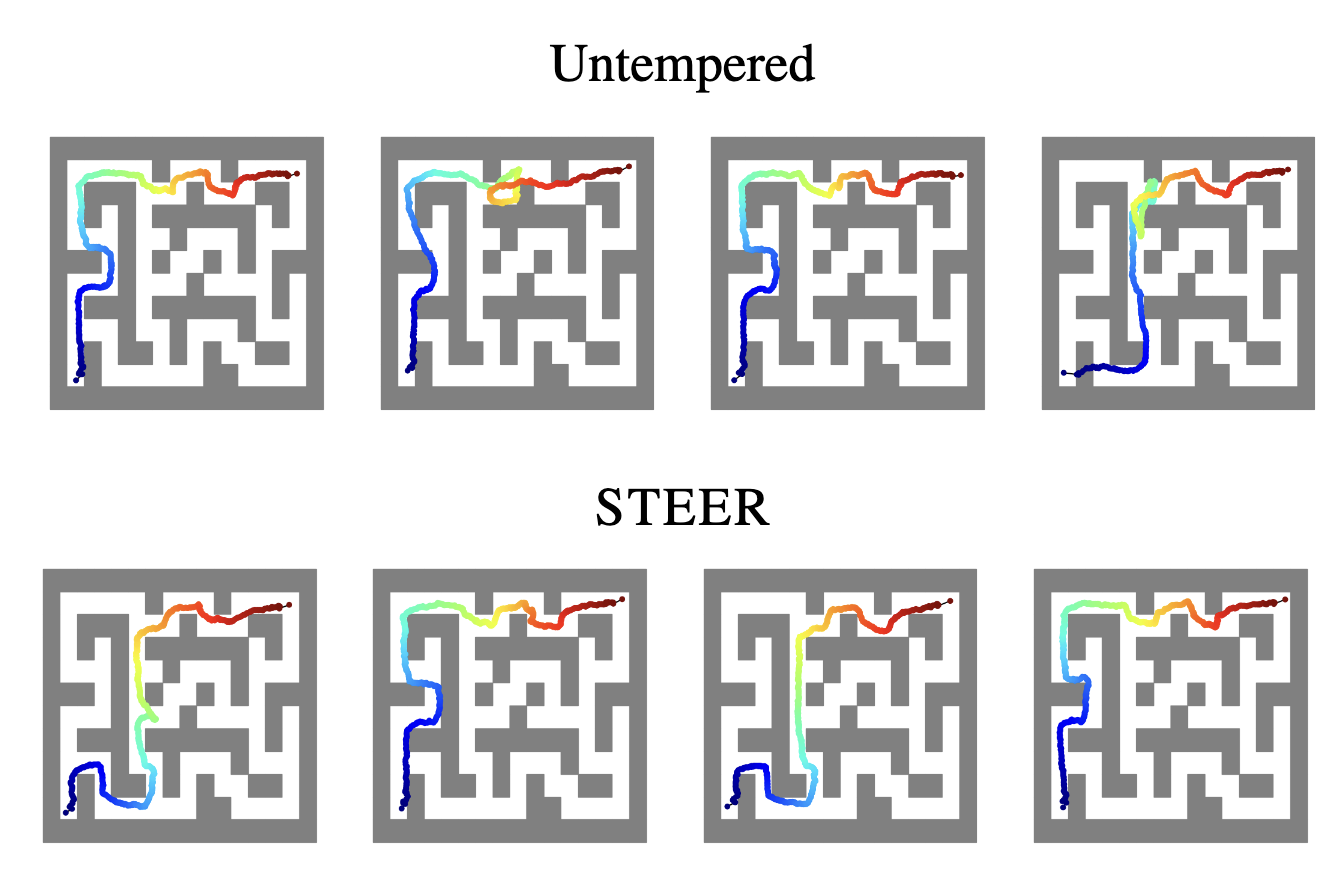
Accurate Low-Temperature Sampling through Parallel Replica Exchange figure
Accurate Low-Temperature Sampling through Replica Exchange
Zoe Wu
Under Review
Our algorithm runs multiple temperature-scaled diffusion chains in parallel and selectively propagates high-quality modes across chains via replica exchange — accepting swaps only when particles are well-suited to their target tempera- ture, thereby preserving each chain’s distributional integrity.
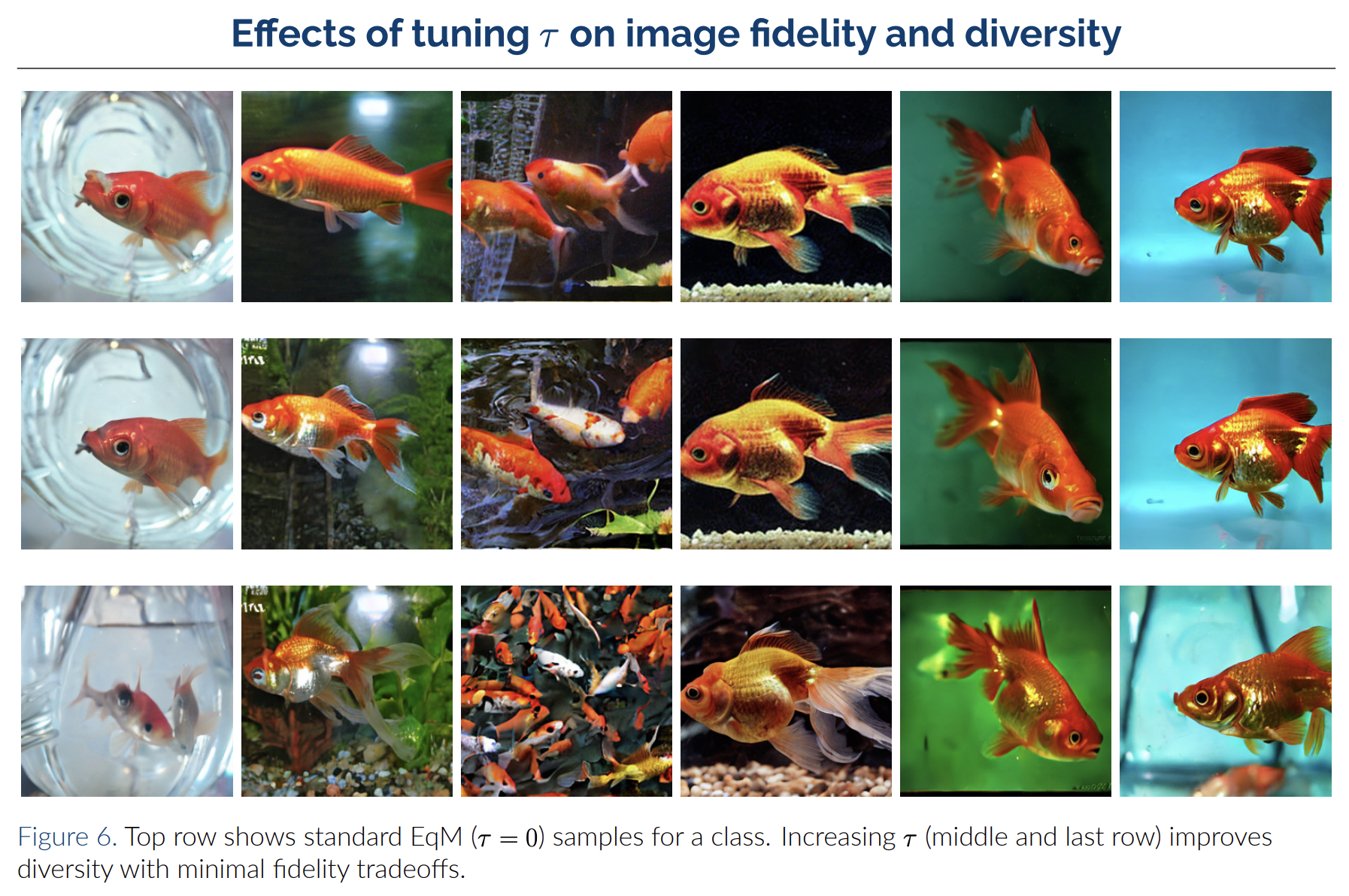
Geometry-Aware Energy-Based Image Modeling figure
Geometry-Aware Energy-Based Image Modeling
Zoe Wu
AAAI, 2025 Workshop Paper
Explores how ideas from statistical inference can create a geometry-aware image sampling process to improve the tradeoff between diversity and fidelity.